
620 km on Two Wheels, a Roadbook by ChatGPT
620 km across Luxembourg on a motorcycle trip planned by ChatGPT. Scenic roads, unexpected detours, and a surprisingly successful experiment.
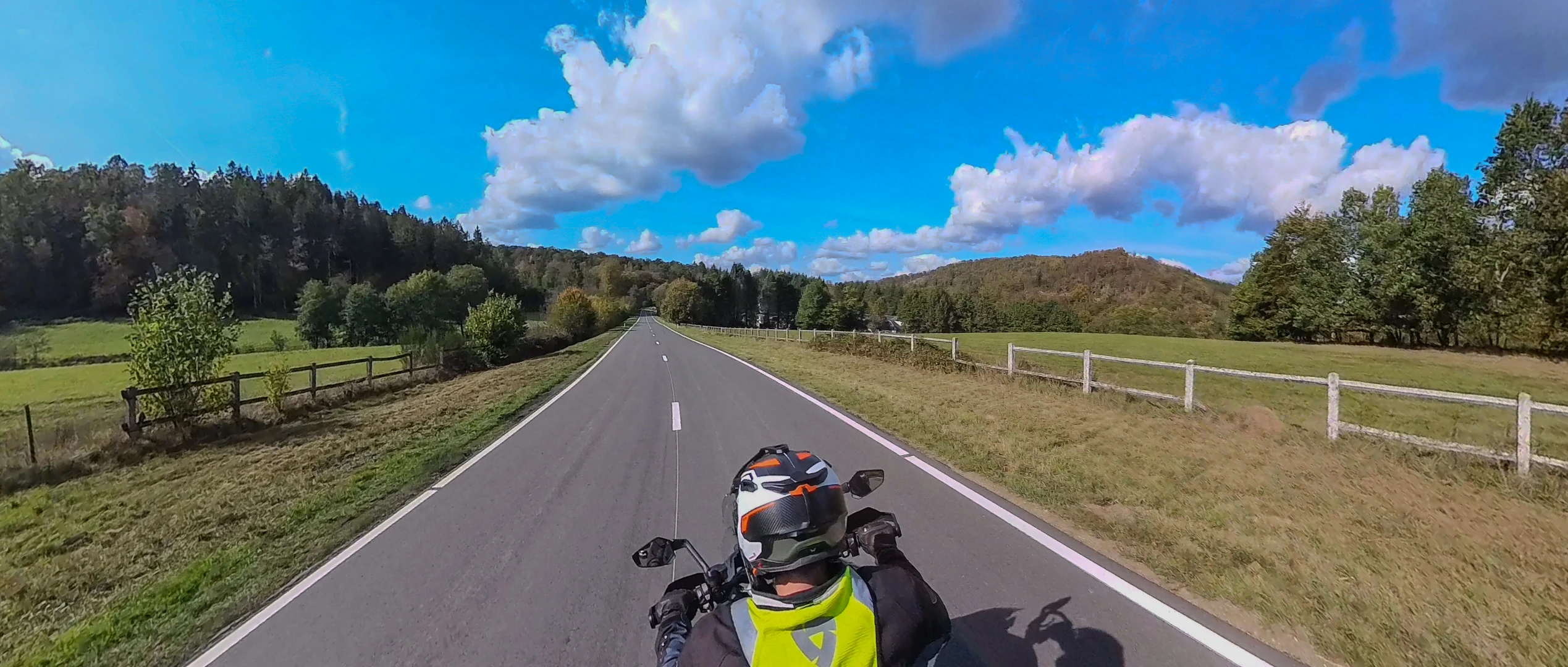
I have a bit of a passion for motorcycles, especially the sense of adventure that comes with riding them.
I'm a fan of the YouTube channels Lolo Cochet and Itchy Boots. Watching them travel the world on two wheels is bound to give you ideas. On a much smaller scale, I'd like to have a few adventures of my own, within my means and the constraints of everyday life.
Several of my friends ride too, and the opportunity was too good to pass up: a weekend away on two wheels. No disappearing to the other side of the world for weeks on end. Just two days of escape, so I wouldn't leave my wife alone with Kiss, our Weimaraner, for too long.
I suggest the idea to a friend, and he agrees. Great, we're off on an adventure. But where?
I'd heard plenty of good things about Luxembourg's roads and the region known as Little Switzerland. It seemed perfectly suited to what we could reasonably cover in two days, sticking to smaller roads.
But even a trip this short takes some planning: finding great roads, piecing routes together, picking out interesting places and finding somewhere to stay. It can easily take hours, and even then you're heading into the unknown to some extent.
That's when an idea struck me: what if I asked an AI to plan this little road trip?
A very simple request
I ask ChatGPT in my own words, without any elaborate prompt. Once the spelling was tidied up, my request looked something like this:
We'd like to organise a short motorcycle weekend, leaving on Saturday morning and returning on Sunday evening. The idea would be to explore Luxembourg's most interesting roads before mid-October. We're aiming for around 300 km a day, with a few worthwhile stops. No motorways. We'd like somewhere comfortable to spend the night, ideally with somewhere to relax and secure parking for our bikes. Could you put together a roadbook with stops, nice places to visit and interesting things to discover?
The AI starts by confirming that the plan is realistic. The first interesting detail: it advises me to avoid a particular weekend because of an event in Vianden expected to attract more than 20,000 people. That's something I probably wouldn't have thought to check.
ChatGPT also knows roughly where I live, so it proposes a route starting in Walloon Brabant rather than at the Luxembourg border.
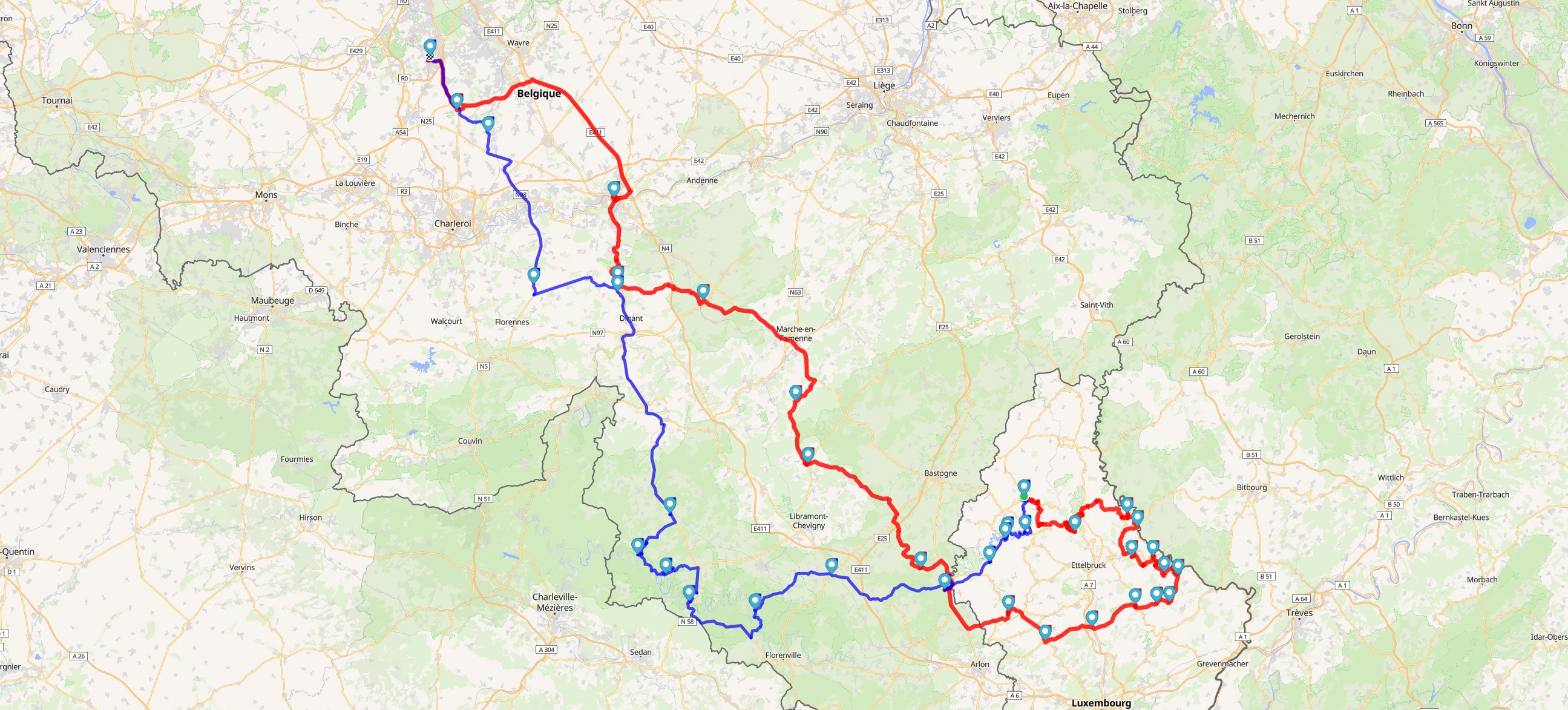
For Saturday, it suggests heading through the Meuse valley, the Belgian Ardennes, the Semois valley and Bouillon, then on to the Upper Sûre Lake and Esch-sur-Sûre. For Sunday, it proposes Bourscheid, Vianden, the Our valley, Echternach and Mullerthal before heading home.
Around 300 km a day, no motorways, scenic viewpoints and breaks along the way. It even makes a sensible point: 300 km of winding backroads, with a few stops thrown in, already makes for a full day on a motorcycle.
On paper, it looks promising.
A roadbook, GPS tracks… and a budget
I could have taken this outline into a specialised tool like Kurviger to build the routes. But I was curious to see just how far ChatGPT could go.
So I ask it to generate the GPS tracks itself, put together a roadbook I can share with my friend, and estimate the cost of the weekend. The AI doesn't bat an eyelid.
Before long, I receive a Word document (.docx) listing the stages, places to discover, suggested stops and a price range covering fuel, hotel, meals and extras. There's also an archive containing the individual route sections and the complete itinerary for each day, in GPX format.
In short, everything we need to hit the road… or almost.
During the planning process, I also ask it to compare its chosen roads with existing, documented motorcycle routes. I want to avoid roads being picked simply because they connect two points on a map. ChatGPT says it has carried out that check, and even assigns interest ratings to the various sections. (Of course, I have no way of knowing exactly how it did this.)
I'll come back to those ratings after the trip: they turned out to be one of the pleasant surprises.
Hotel booked, adventure almost sorted
Once my friend and I agree on the dates, all that's left is to book our overnight stay. Our first choice is no longer available, so ChatGPT suggests other hotels that meet our requirements: secure motorcycle parking, a pool or spa, a restaurant and breakfast.
We book a hotel in Wiltz. Dates fixed, accommodation confirmed: it's starting to feel real!
Another useful suggestion: ask ChatGPT the day before departure to check for possible roadworks and closures along our planned tracks.
How about a little TET?
My friend and I both ride adventure bikes. To add to that feeling of adventure, I wonder whether we could incorporate a section of the Trans Euro Trail (TET), a network of routes for motorcycle travel on roads and trails.
ChatGPT's first response is encouraging but cautious: perhaps, provided the routes and access restrictions can be checked. After further research, no usable section seems to fit our itinerary, so we drop the idea.
A shame, but still an interesting experiment: you can ask the AI to take into account much more specific requirements than simply choosing a road route. In Belgium, opportunities to ride legally on unpaved tracks are unfortunately fairly limited, with restrictions varying from one region and trail to another. Elsewhere, this could be a perfectly realistic addition, as long as you check both access rights and riding conditions.
One last check before setting off
The day before departure, I go back to ChatGPT as planned and ask it to check the tracks for roadworks and closed roads.
It tells me the routes appear passable, while pointing out a few roadworks with no reported closures. Everything seems ready.
620 km later: the verdict
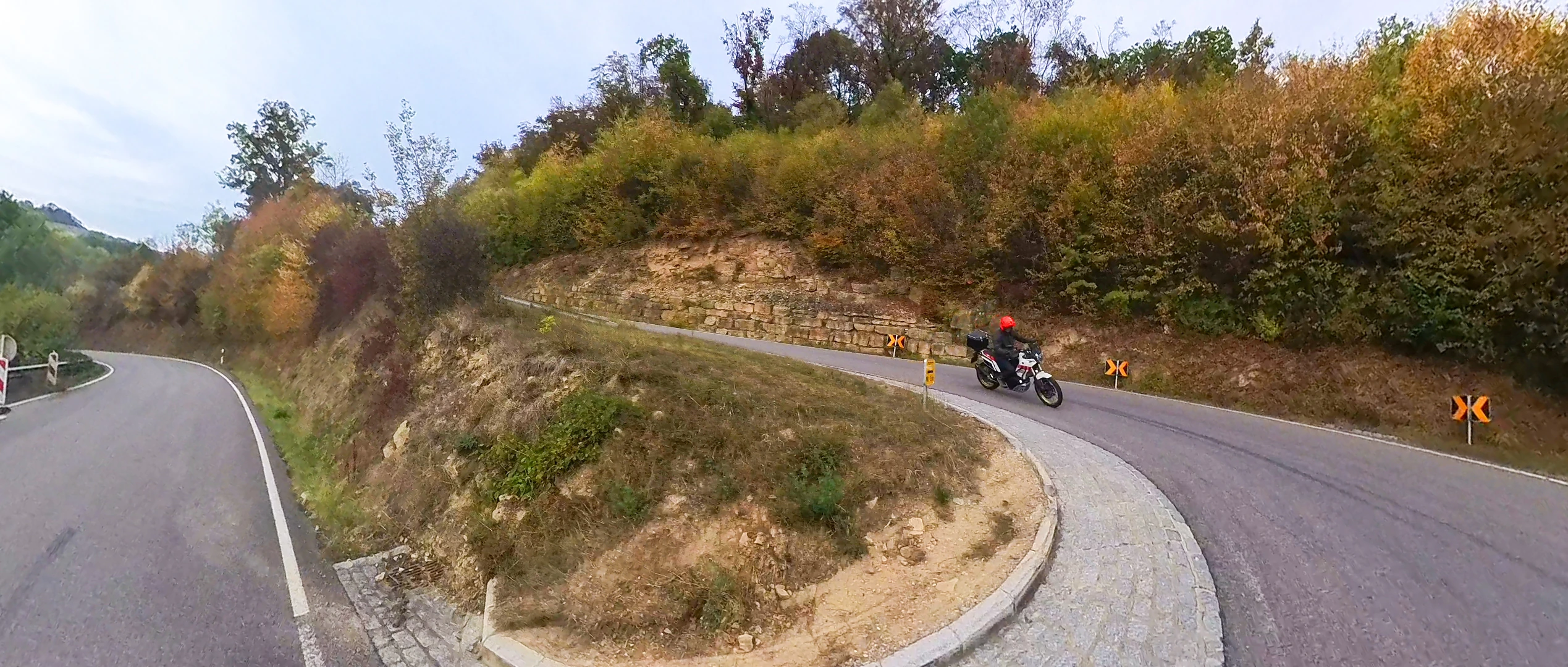
I won't recount the entire weekend kilometre by kilometre, but the weather was on our side: an October weekend blessed with Indian summer sunshine and no excessive heat. Add winding roads, beautiful scenery and the simple pleasure of riding together, and it was a great trip. As far as adventure and discovery were concerned, mission accomplished.
The hotel lived up to our expectations too. And those interest ratings ChatGPT had given the roads? I have to admit they matched our impressions remarkably well. That's hardly scientific validation, of course, but the correspondence was striking.
So was everything perfect? Well, let me nitpick a little…
Waypoints that weren't points of interest
I hadn't examined the GPS tracks in detail. Some sections used what looked like the geographical centre of a town or village as a reference point. The result: pointless detours, and sometimes even U-turns.
Looking back, I should have been more specific. A stage should end at a clearly identified, worthwhile location: a pleasant village square with a few cafés, a viewpoint with parking, a monument, somewhere nice to take a break… Not just the centre of a town because its name happens to appear in the roadbook.
Fortunately, I quickly learned to spot these issues with the help of the navigation systems, and avoided quite a few unnecessary detours. More on that in a moment.
Three road closures over more than 600 km
Despite the previous day's check, we encountered three road closures: two due to roadworks and one because of a local festival. We were eventually able to get through both roadwork sites on our motorcycles. The festival, on the other hand, meant taking a detour.
I suspect those closures on minor backroads simply weren't properly documented in the sources available to the AI. Perhaps they were flagged in a community-based app like Waze? I didn't check.
Across more than 620 km of secondary roads, I find that perfectly acceptable. Still, it's a reminder that even a last-minute check can't guarantee a completely trouble-free route. An AI can help look up reported closures, but it won't necessarily have comprehensive or up-to-date information about every little backroad.
OsmAnd, my rally co-driver
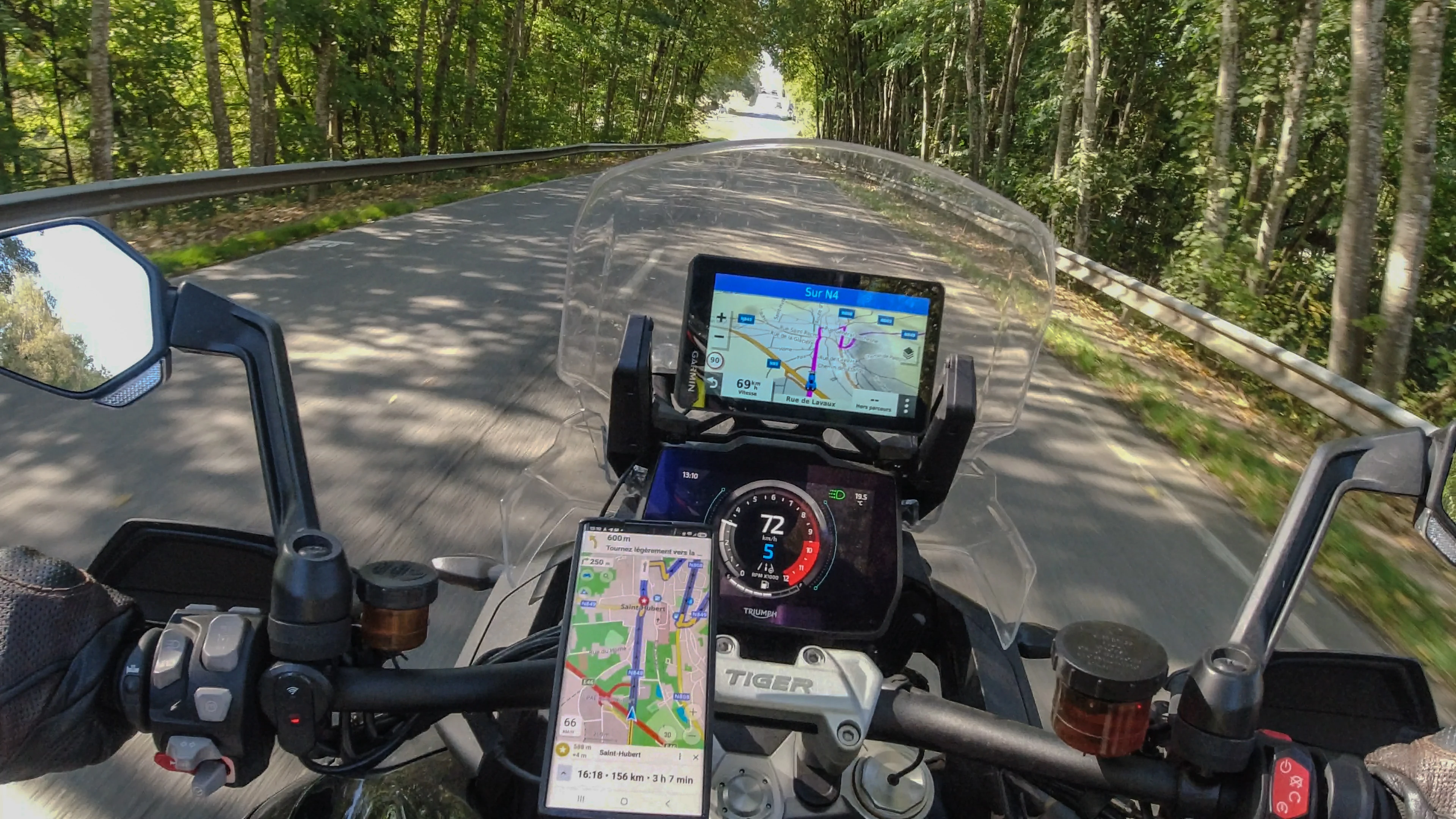
On my motorcycle I use a Garmin Zumo XT, which supports GPX files. But experience has taught me to keep a backup, so on ChatGPT's advice I'd also set up OsmAnd on my phone.
Very quickly, the roles were reversed: OsmAnd became my main navigation system, while the Zumo was mostly there to give me an overview of the route.
Why? Because OsmAnd turned out to be much more than a GPS: it was a genuine rally co-driver. It warned me about hazardous areas, tight bends and how sharp they were, steep gradients and major changes in elevation. On these little roads, that was useful information for anticipating what lay ahead. A little too talkative at times, perhaps, but genuinely reassuring.
Having both screens also helped me spot several poorly chosen waypoints ahead of time and avoid unnecessary backtracking. My backup had become my primary tool.
What I'll ask for differently next time
This first experiment helped me identify three simple improvements:
Distinguish waypoints from actual stops. Ask for each route section to end at a precise address or set of coordinates: a square with cafés, parking near a viewpoint, a notable landmark. Towns along the way can shape the route without forcing a trip into their centres and back out again.
Require a continuous route and check the connections. No detours without a clear purpose, no artificial out-and-back just to reach a poorly placed waypoint. Once a track has been generated, display the whole thing on a map before setting off.
Cross-check road information. Keep the last-minute check, but accept that minor local closures may go unnoticed. Be prepared to improvise, with reliable navigation and, if possible, an additional source of information.
These weren't major design failures, just details I hadn't thought to specify. The AI had understood the trip we wanted to take; it was the translation of that plan into precise GPS instructions that needed refining.
So, would I do it again?
Without a moment's hesitation!
We had a fantastic weekend on some beautiful roads. And I probably would never have reached this level of preparation using my usual methods, or at least not without spending a considerable amount of time on routes, hotel options, budget, stops and GPS files.
Not everything was perfect, but those imperfections took nothing away from the pleasure of the trip. Above all, they taught me how to phrase my requests better.
In the end, ChatGPT didn't experience the adventure for us. It simply helped us spend far less time organising it… and far more time enjoying it.
Some useful links
- Lolo Cochet — YouTube channel and Kap2Cap, dedicated to motorcycle travel.
- Itchy Boots — YouTube channel and official website.
- Kurviger: a tool specialising in motorcycle route planning.
- Trans Euro Trail: a motorcycle route project with official information and files to consult before setting off.
- OsmAnd — navigation documentation: navigation and guidance using GPX tracks.
Comments
No comments yet.
Add a comment