
A Smart Lock I Didn't Need
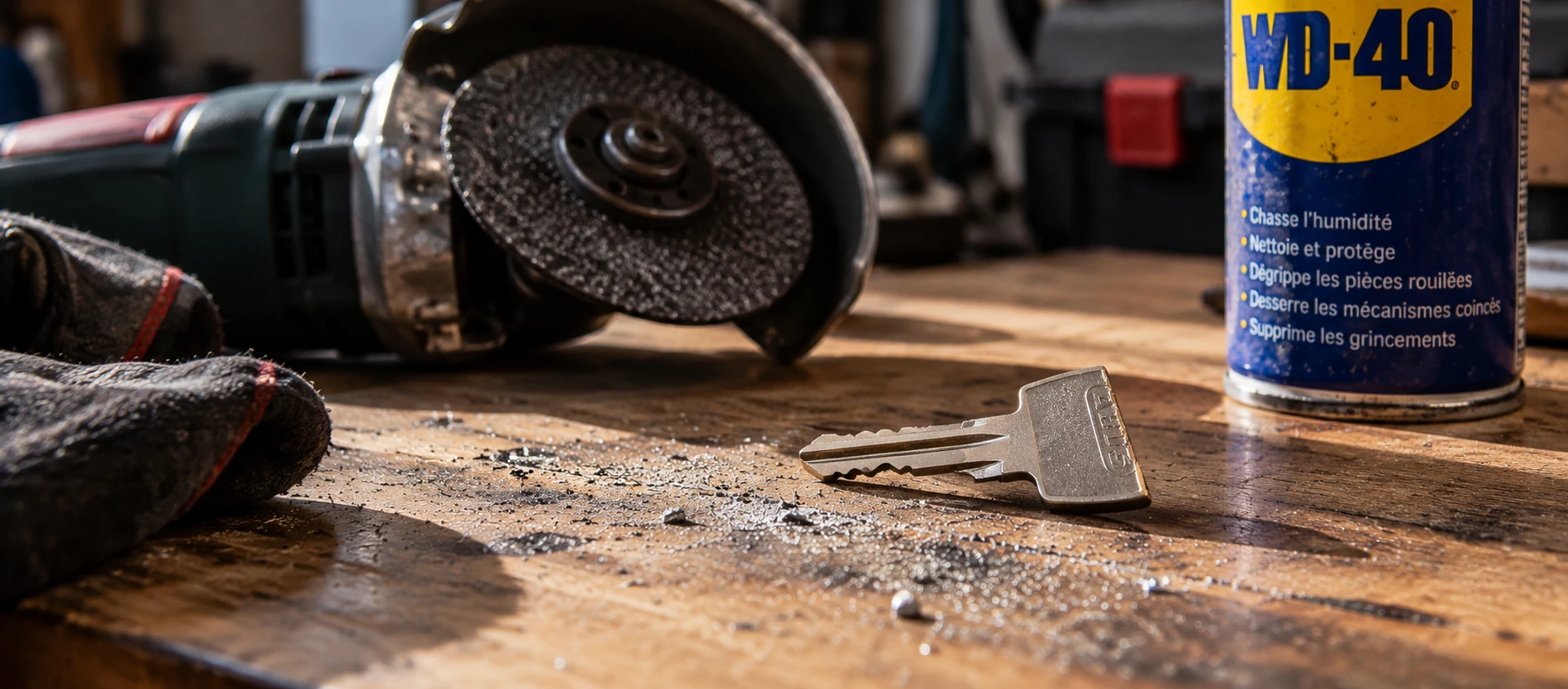
There are projects that start with a need.
And then there are the ones that simply start because you feel like playing with a new toy.
The Nuki Smart Lock Pro clearly belongs to the second category.
I could probably build a whole case around comfort, security, or home integration. The problem is that, when I was considering buying it, I didn't actually need any of that.
A regular lock already does a remarkably good job of opening and closing a door.
So why connect it?
Maybe because smart locks have become one of those things you end up seeing as almost mandatory in a "smart" home. Is that the result of a few years of videos, reviews, and influencers showing them off from every angle? Maybe, a little.
But that would probably be giving them too much credit.
The real reason is much simpler:
I'm a geek, and it was a new toy.
To avoid any ambiguity: the lock was bought with my own money, no partnership with Nuki.
Okay, but which one?
So I started browsing what was out there on the market.
Nuki seemed to hold a fairly important place in the landscape. Several models available, a generally good reputation, and enough positive feedback: the signs looked good.
At first, my choice was fairly reasonable: the Smart Lock Go.
The budget stayed reasonable enough to satisfy curiosity, and mostly just to "see". After all, I wasn't even sure a smart lock would actually bring me anything.
Naturally, I started digging.
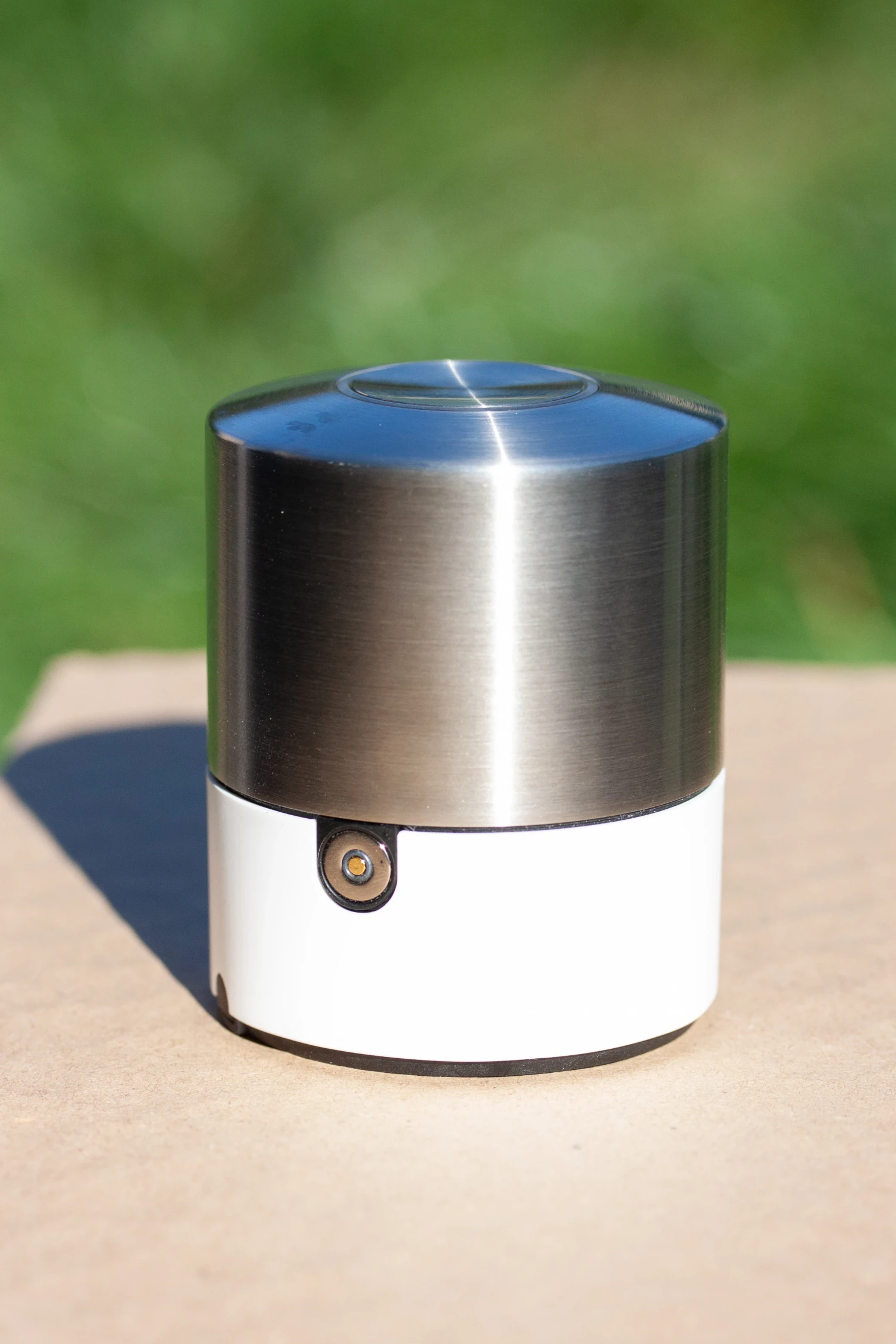
And the more I dug, the less the Go seemed to match what I wanted. The bulk, a few restrictions, some differences compared to the higher-end models… Nothing individually deal-breaking, but enough small things to start looking a bit further up the range.
And that's where the Smart Lock Pro ticked noticeably more boxes.
It was also substantially more expensive.
So I did what any reasonable person does in that situation: I turned the problem over every which way, compared the models, tried to convince myself the Go was more than enough…
… and then I ordered the Pro.
That's also when I really got interested in Thread and Matter.
So the lock wasn't a consequence of my tinkering with Thread and Matter.
It was actually the other way around.
What about the cylinder?
There was one small detail left before mounting all of this on my door.
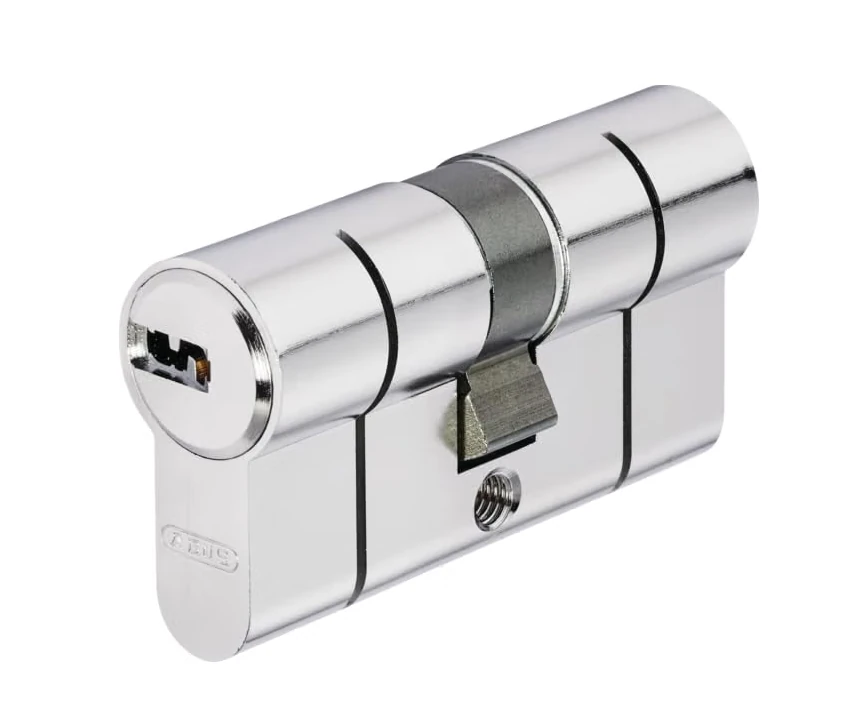
A lock like this one fits over a key inserted on the inside. So I wanted a disengageable cylinder — or one with an emergency function — that would let me use a second key from the outside even while a key was inserted on the other side.
And for me, that point mattered for another reason:
I absolutely wanted to keep a fully mechanical way to get into the house.
Dead battery, electronics failure, a smart lock deciding today isn't its day… didn't matter.
I wanted to be able to pull out a good old key and open the door.
I could have gone with the Smart Lock Ultra kit, which includes its own cylinder. But at that price point, I preferred to keep more flexibility and pick a standard cylinder that matched my door separately.
I finally settled on a disengageable ABUS cylinder.
Not the most sophisticated model in the catalog, and that was entirely intentional. Installing an ever-more-secure cylinder only makes sense if the rest of the door offers a comparable level of resistance.
In my case, this model was more than sufficient and consistent with my front door.
I also had two much more down-to-earth criteria: having at least five keys, and being able to easily get more cut.
The "smart" part could fail without turning my front door into an IT problem.
Waiting is part of the experience
So I ordered the cylinder and the lock at the same time.
The cylinder arrived two days later.
The lock…
much later.
I had ordered the Smart Lock Pro directly from Nuki's website. By the way, it seems fairly common to find a discount code if you look around a bit before ordering. Given the Pro's price, it's worth a few minutes of searching.
Delivery, handled by UPS, was promised within a few days.
It would actually take about three weeks.
I'm not going to turn this post into a trial of UPS. Let's just say I spent several hours waiting, contacting different people, re-explaining the situation, and repeatedly being told that, this time, the package would be delivered the next day.
It wasn't.
And whenever I tried to understand why, the explanations sometimes got pretty surprising.
I could go on.
What struck me most wasn't really the delay. A package can get lost, a truck can break down, a mistake can happen.
It was more the impression that nobody was actually able to know what was going on or to act on the situation, despite the hours spent trying to sort it out.
A fairly good illustration of what outsourcing and increasingly impersonal services can produce — along with IT systems that handle the normal case very well but are much worse at letting a human step in when something goes wrong.
A story almost worthy of Kafka.
But that deserves a post of its own.
Back to our lock.
Meanwhile...
Three weeks is a long time when you're waiting for a new toy.
So I had plenty of time to replace the cylinder.
Replacing it actually had a small point of interest independent of the Nuki: for a while, I'd noticed my lock was getting slightly stiffer to turn.
Nothing really problematic. The door still worked, but the motion was less smooth than before.
I figured a new cylinder would probably fix that along the way.
Well…
no.
After replacing it, the behavior was essentially the same.
Not annoying enough to start taking the door apart.
I'll deal with it later.
Finally!
After about three weeks, the package finally arrives.
Needless to say, I didn't let it sit on a table for two days before opening it.
I think I'd shown enough patience by that point. :-)
The first impression is immediately good.
It's clean, neat and well presented. The lock inspires confidence, the accessories are properly organized, the documentation is there, and the steps are clearly explained.
You can tell right away you're dealing with a product that was designed as a finished product.
I start with the checks requested using the little cardboard template provided.
Dimensions, cylinder position, available clearance…
Every signal is green.
I place the little adapter on the cylinder.
No issues.
All that's left is to put the lock in place.
Well…
except…
A few millimeters too many
I present the lock to the cylinder.
And it won't go on.
The reason quickly becomes obvious:
the key sticks out too far from the cylinder.
I had noticed, when I received the new ABUS cylinder, that its keys were particularly long.
To open a door by hand, a few extra millimeters change absolutely nothing.
To install a motor directly over the key, though…
that changes everything.
The cylinder is compatible.
The adapter is compatible.
The door is compatible.
The key…
a little less so.
Alright.
By this point, that's not exactly the kind of small annoyance that's going to stop me.
The key is too long?
Fine, we'll shorten it. :-)
An angle grinder, a few sparks, and one cut later…
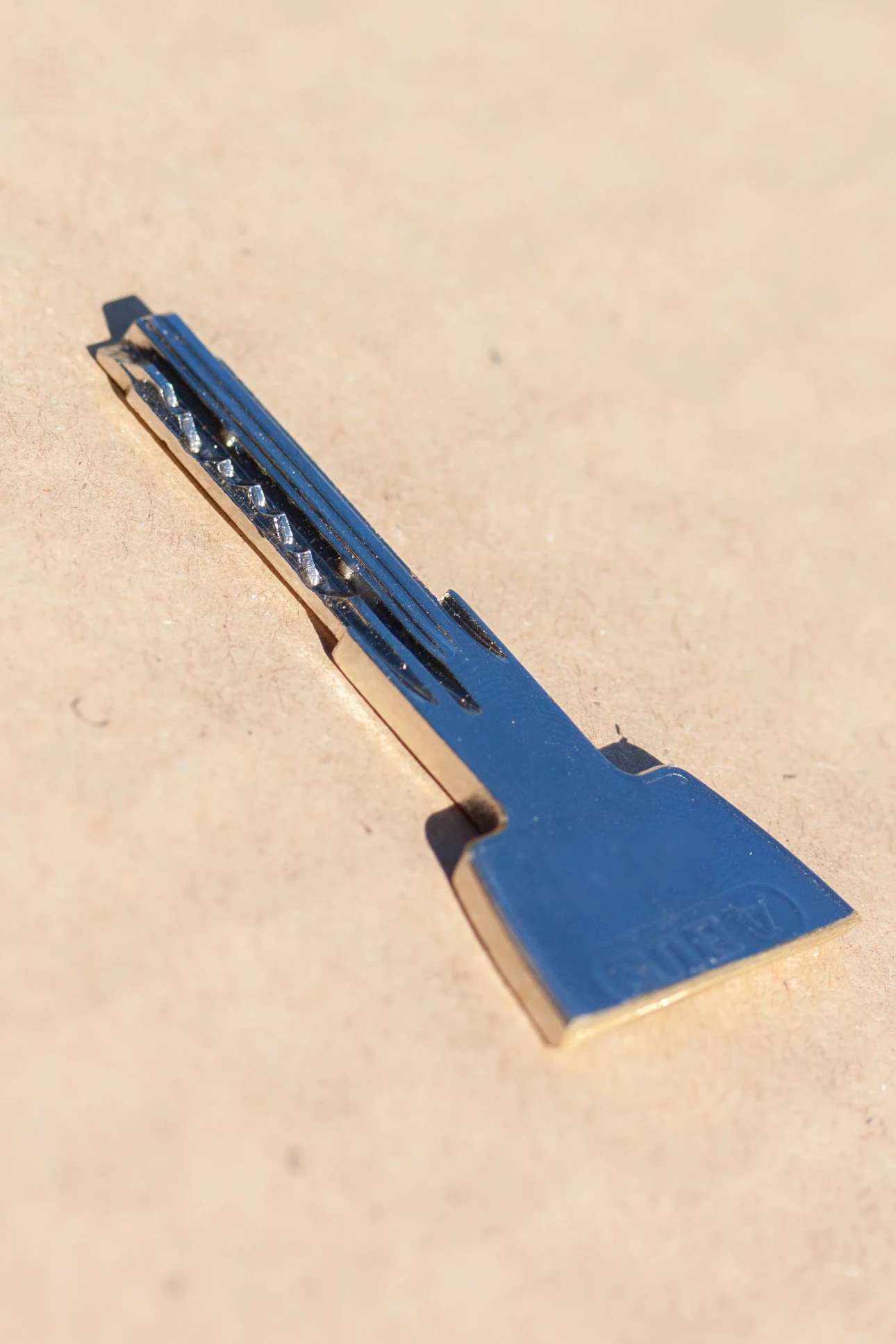
the key is no longer too long.
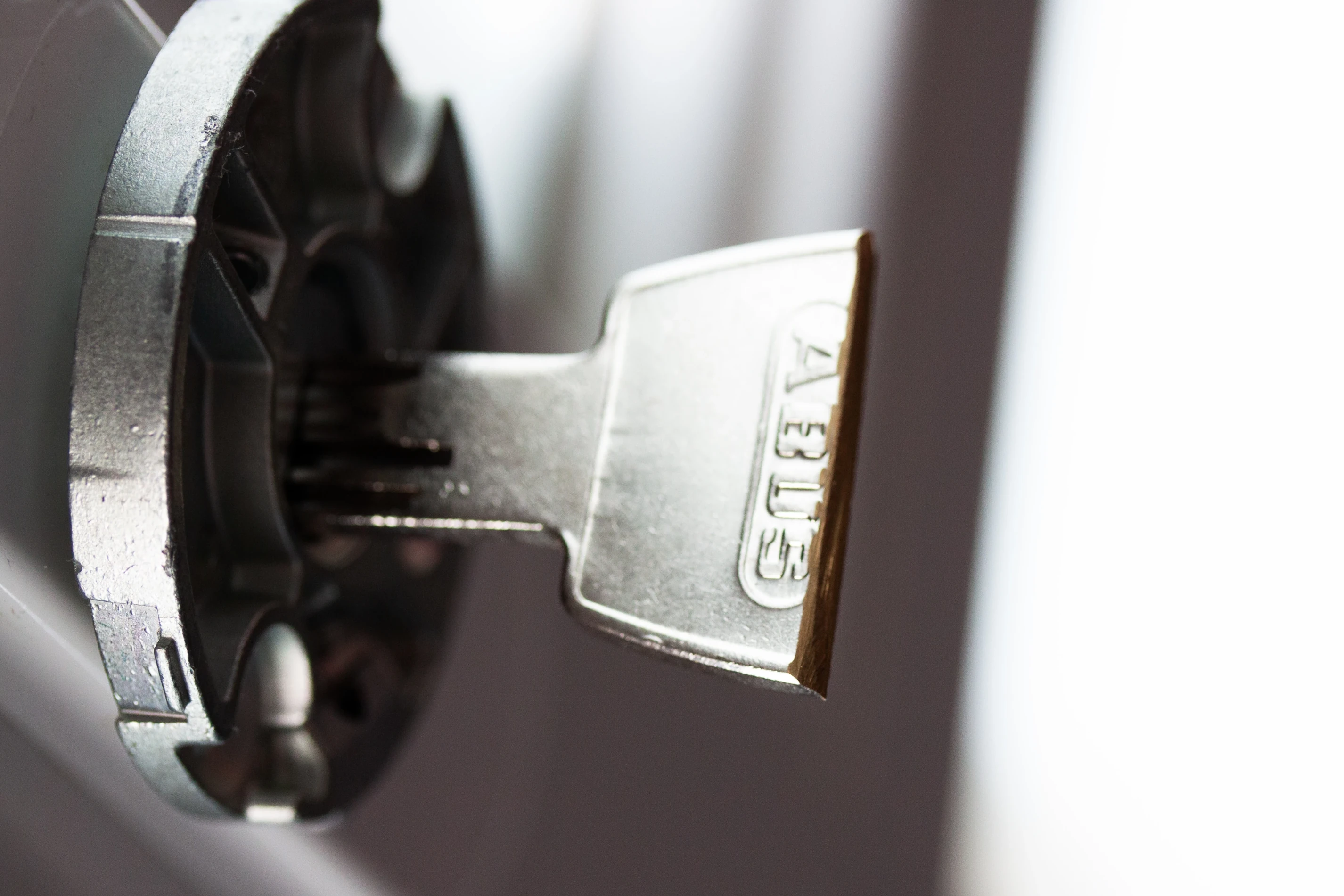
I put everything back together and, this time, the Nuki fits perfectly.
Turns out some compatibility issues can still be fixed without a firmware update.
An app, a few screens...
I'll spare you the details of installing the Nuki app and the initial setup.
Not because they're bad — quite the opposite — but simply because there's not much to tell.
You follow the steps, the lock gets detected, gets configured, and the instructions are clear enough that it's hard to get lost.
In short:
it works as expected.
And sometimes, with a connected device, that's probably the best compliment you can give.
Time to move on to calibration.
Ah right... the slightly stiff door
The Nuki now needs to learn the lock's travel: figure out how far to turn the key and identify the mechanism's different positions.
I start the process.
The Nuki begins turning…
And it doesn't like it.
Remember that lock I called "slightly stiff"?
Well, the Nuki noticed it too.
Something that was barely a problem by hand becomes a much bigger deal when a small motor has to reproduce the movement reliably.
Alright.
A key that was too long hadn't stopped me.
A slightly stiff lock wasn't going to get in my way either.
I take the cylinder out, carefully check that nothing looks wrong.
Nothing.
The cylinder is brand new, and the previous one showed exactly the same behavior: hard to pin this on it.
A bit of WD-40 in the door mechanism, just in case.
I put it back together.
I test it.
No better.
So I step back a bit.
My door uses a multi-point lock.
That's obviously nothing new. I'd known that since the day it was installed.
But until then, that detail had never really caught my attention.
So I take a closer look at the different locking points.
And this time, the problem becomes obvious.
That's where it's binding.
Nothing broken: just several points in the mechanism that, over time, had started offering a bit too much resistance.
A little WD-40 on each of the affected points, a few movements of the mechanism…
I turn the key.
Miracle.
Everything glides again, almost effortlessly.
Turns out WD-40 really is a miracle product.
You just have to put it in the right place. :-)
I put the Nuki back in place and restart the calibration.
It turns one way, then the other, tests its different positions…
And everything runs smoothly.
About thirty seconds later, it's done.
Three weeks of shipping, a new cylinder, a key put through an angle grinder, and WD-40 finally applied in the right spot…
for a calibration process that took thirty seconds.
First benefit
Even before I actually started using the Nuki, it had already managed to prove useful.
The mystery of the slightly stiff door was solved.
I admit I probably should have looked into it a long time ago.
But you know how it goes with that kind of small issue: nothing's actually broken, the door still works, you just have to push a tiny bit harder than before…
So you get used to it.
The Nuki, on the other hand, didn't get used to it.
Its refusal to calibrate forced me to find the cause of that resistance and, in the end, to service a mechanism that simply needed it.
The result:
my door now works better than it did before I installed the smart lock.
That was absolutely not on the list of advertised features.
But I'll take it. :-)
So, now what?
Naturally, I start by playing around with the app a bit.
Lock.
Unlock.
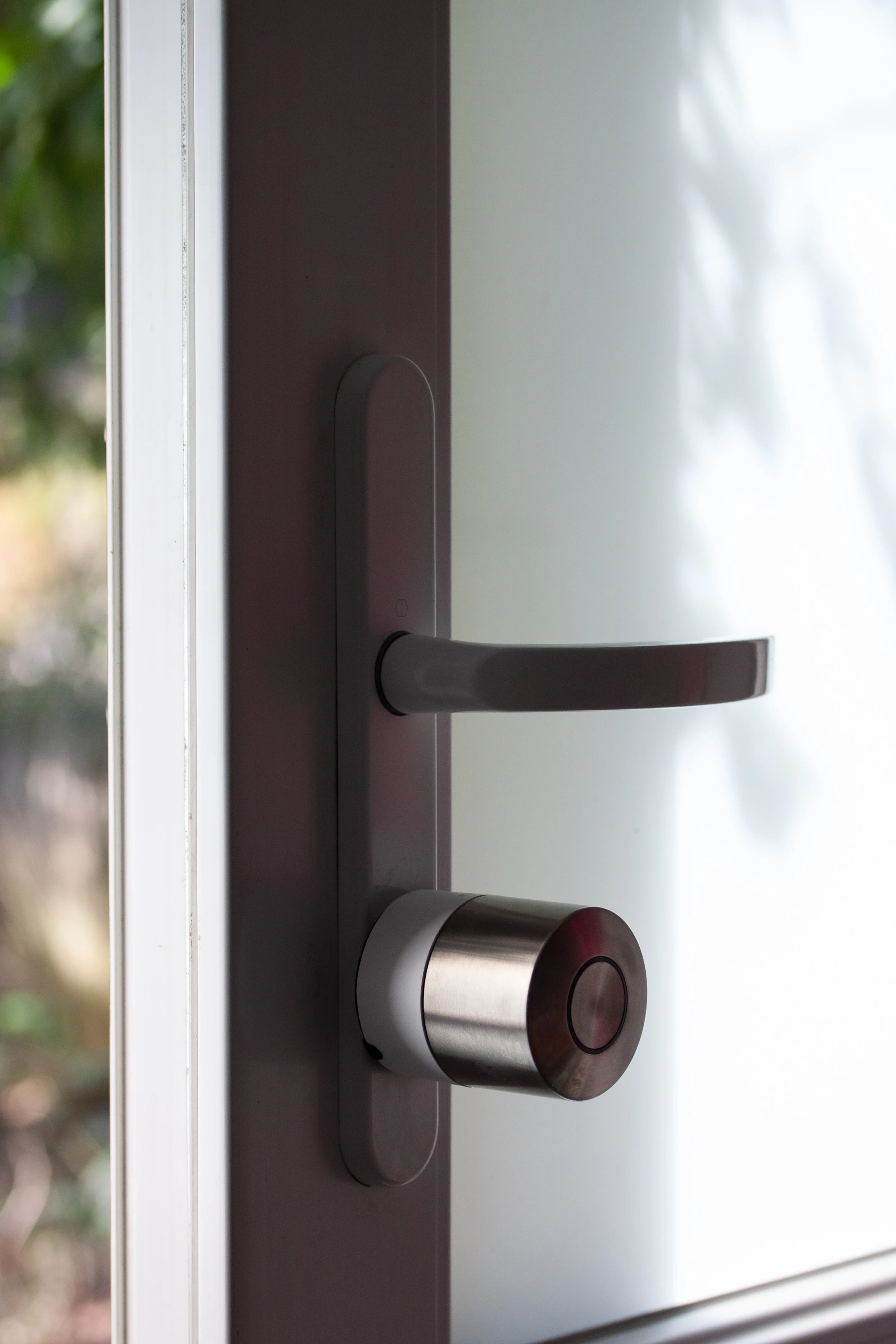
Watch the key turn on its own.
Do it again, because hey… it's new.
Then comes the moment to proudly show off my new acquisition to my wife.
She looks at the lock.
She looks at me.
Then gives me that slightly skeptical look I'm starting to know well.
The one that more or less means:
"Uh… and what exactly is this going to change in our daily life?"
Excellent question.
— Well… now you can open the door with your phone.
No particular reaction.
I try a second angle.
— Or with your watch!
…
That didn't seem to convince her any further.
I could obviously have pulled out one of the classic smart-lock selling points:
— We could unlock the door remotely so a delivery person can drop a package inside.
Except no.
That feature directly conflicts with another system already deployed in the house.
Kiss.
Our 35-kilo Weimaraner doesn't have a documented API yet, and his behavior when a stranger opens the front door while we're out lacks a certain determinism.
And even assuming Kiss would greet the delivery person with enthusiasm, I'm not sure the delivery person would share that enthusiasm when a big gray head appears behind the door they just opened.
So no.
We're not going to remotely open the house to delivery people.
Alright... let's try anyway
One small clarification, though: my wife has a fairly geeky side too.
I actually suspect it became a survival skill after a few years spent with me. :-)
So her skeptical look wasn't hostility toward connected devices.
It was something much more awkward than that.
She was simply asking an excellent question.
Despite my not-particularly-convincing answer, she installs the app on her phone and, indirectly, on her watch.
A few days go by.
And it's eventually her who brings the subject back up.
That smart lock whose point she couldn't quite see a few days earlier?
Turns out, it's actually handy.
Not for letting a delivery person into the house.
Not for building some elaborate smart-home scenario.
Just for small everyday things.
Coming back from grocery shopping, for instance, she can unlock the door before she even starts unloading the trunk.
No more setting bags down or fumbling for keys with your arms already full.
I discovered another equally mundane use myself:
jogging.
I can head out with just my watch.
No phone.
No set of keys bouncing around in a pocket for a few kilometers.
On the way back, my watch is enough to open the door.
None of this revolutionizes our lives.
But once you start using them, these small frictions you'd come to consider perfectly normal turn out to be surprisingly easy to give up.
So, useful?
Let's be clear.
No.
Strictly speaking, this smart lock remains completely unnecessary.
It hasn't turned our lives upside down. We managed just fine opening our door before it arrived, and a good old key remains a remarkably effective tool for that job.
But it would be just as wrong to say it brings us nothing.
It simply adds a small everyday convenience.
And then there are the exceptional situations.
If, someday, while we're on the other side of the planet, a neighbor or family member needs to get into the house, we can unlock the door remotely for them.
Sure.
You can leave a spare key with family.
Another one with a neighbor.
That works.
It has always worked.
So the Nuki doesn't solve some unsolvable problem.
It just makes certain situations easier.
Did I need a smart lock?
Still no.
Do I regret installing it?
Not at all.
And what about Home Assistant in all this?
There's obviously one detail left.
In a house where pretty much everything that can end up in Home Assistant eventually does, this lock was obviously going to go through that too.
And, to be perfectly honest, that was almost one of the original motivations for this purchase.
One more thing to connect.
One more device to integrate.
One more excuse to play with Home Assistant.
In fact, it was while considering buying this lock that I really got interested in Thread and Matter, as I mentioned earlier.
So, obviously, a few weeks later, the Nuki is now perfectly integrated into Home Assistant.
Well…
no.
It still isn't.
The reason is far less interesting than you might imagine: I had other things to do.
And above all, the Nuki app does the job perfectly.
We use the lock with our phones and our watches. It locks and unlocks the door when we ask it to. Remote access is available.
And so far, I simply haven't felt a pressing enough need to integrate it into Home Assistant.
Which is fairly amusing when you think back to where this all started.
I bought a device I didn't really need, partly because I wanted to add yet another thing to my smart home.
And in the end, we started using it for what it is before we even worried about integrating it into our home automation.
That's probably the best indicator of how genuinely useful it is.
The Nuki hasn't transformed our daily lives.
It didn't answer any pressing need.
It simply spares us a few small inconveniences we'd gotten so used to that we no longer even thought of them as such, and naturally enough that I've almost forgotten the reason that pushed me to buy it in the first place.
Anyway.
It'll obviously end up in Home Assistant eventually.
Let's not get carried away, though. :-)
Comments
No comments yet.
Add a comment